Skip to content
Sort By
Application
Categories

Features & Benefits
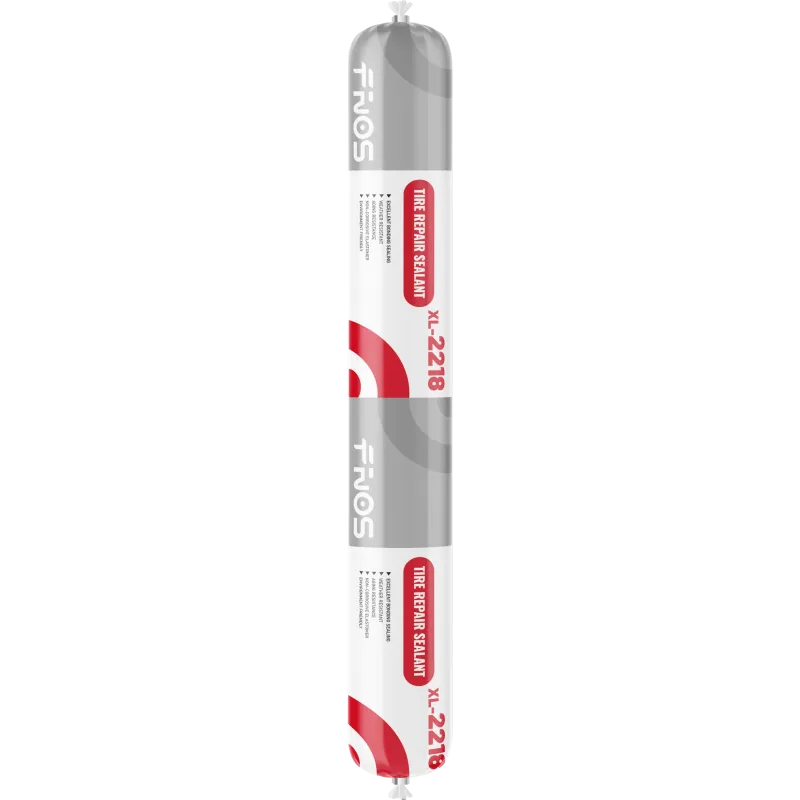
1. One-component, neutral cure, room temperature vulcanization (RTV) silicone sealant.
2. Easy to operate, normal temperature curing allows on-site tire repair to form a complete sealing layer within a few minutes to tens of minutes, restoring the air tightness of the tire, eliminating the need for high-temperature and high-pressure equipment, and on-site construction is extremely convenient.
3. Wide temperature range of use. After curing, it can maintain elasticity and strength between-60℃ to 200℃(long-term) or even-50℃ to 250℃(short-term), ensuring that sealing performance can still be maintained in extreme climates.
4. Excellent weather resistance, with product characteristics such as ozone resistance, ultraviolet resistance, aging resistance, chemical corrosion resistance (acid, alkali, oil) and other product characteristics, and can resist oxidation, ultraviolet radiation and fuel and oil corrosion in the tire working environment.
5. It has strong adhesion to metal, glass and rubber substrates, especially the adhesion effect on natural rubber and synthetic rubber is remarkable.
Applications
1. Used as sealing, shock-absorbing and waterproof glue for car doors, engine compartments, chassis and other parts; providing insulation protection for electrical connections inside the car.
2. As an insulating material for potting electronic components, moisture-proof and dust-proof circuit boards and high-frequency circuits.
3. Used in aerospace engine compartment sealing, structural heat protection and fire retardant coatings to maintain performance in extreme temperatures and high pressure environments.
4. In terms of medical devices, it is used to manufacture sealed valves, catheters and disposable packaging to meet the requirements of non-toxic and disinfectant resistance.
5. Waterproof and moisture-proof sealing of window frames, curtain walls and pipes.
Technical Information
The operating conditions are 23 ± 2℃, relative humidity 50 ± 5%. The Test results are as follows:
| No. | Test Property | Technical Specification | Test Result |
| 1 | Extrudability, s | ≤10 | 1.5 |
| 2 | Tack-free Time, h | ≤3 | 0.6 |
| 3 | Hardness, Shore A | 20–60 | 45 |
| 4 | Tensile Adhesion Strength, MPa | ≥0.6 | 1.04 |
| 5 | Adhesion Failure Area, % | ≤5 | 2 |
| 6 | Elongation at Maximum Tensile Strength, % | ≥100 | 291 |
Color
color: black, or be customized as requested.
construction method
First, use a low-speed grinder with an aluminum oxide grinding head to remove all the old rubber layer, burrs, silicone oil, etc. around the hole to form a rough metal/ rubber base surface. After polishing, the remaining rubber powder, oil and dust should be thoroughly removed to ensure that the surface is dry, oil-free and dust-free. Apply the normal-temperature vulcanizing agent evenly and thinly, with a thickness just enough to cover the base surface to avoid accumulation. It is strictly forbidden to use an open flame or heat after applying the agent. It needs to naturally evaporate at normal temperature and dry until the surface is not sticky. When sealing tire end faces or large areas, apply RTV silicone rubber in batches, with the thickness of each layer controlled to 2~3m. After coating one layer, let it solidify at room temperature, and then continue with the next layer until the required total thickness is reached. For threaded parts, only apply layer-by-layer coating on one of the threaded parts (such as a nut), each layer is 2~3mm, and a complete sealing layer will be formed after curing. If a silicone rubber patch is used, first align the patch with the center of the wound, press the center first, and then push evenly around to prevent the formation of bubbles. Use a special roller or compaction tool to roll the patch from the center outward multiple times to ensure that the patch and the original tire are completely attached and there are no gaps. After tearing off the protective film on the surface of the patch, apply a layer of sealant on the surface to form a second protective layer to improve durability. After completion, keep it aside for at least 24 hours. After 24 hours, check whether the patch is firm, bulging, or falling off, if necessary, make slight repairs before reusing it.
Why Choose Finos
Expertise & Advanced Laboratory
With 20+ years of expertise and state-of-the-art laboratory equipment, we ensure every batch meets the highest global standards.
Proven Customization Success
Deliver custom formulas and colors, helping many clients achieve market success with high-performance, tailor-made sealant solutions.
Advanced Reverse Engineering
We analyze and replicate complex formulas, delivering high-performance alternatives that match or exceed original product specifications.
Traceable Quality Assurance
Every shipment is sampled and tested quarterly, with transparent reports sent to clients for guaranteed long-term reliability.
Get Free Tailored Sealing Quote in 24 Hours!