Skip to content
Sort By
Application
Categories


Features & Benefits
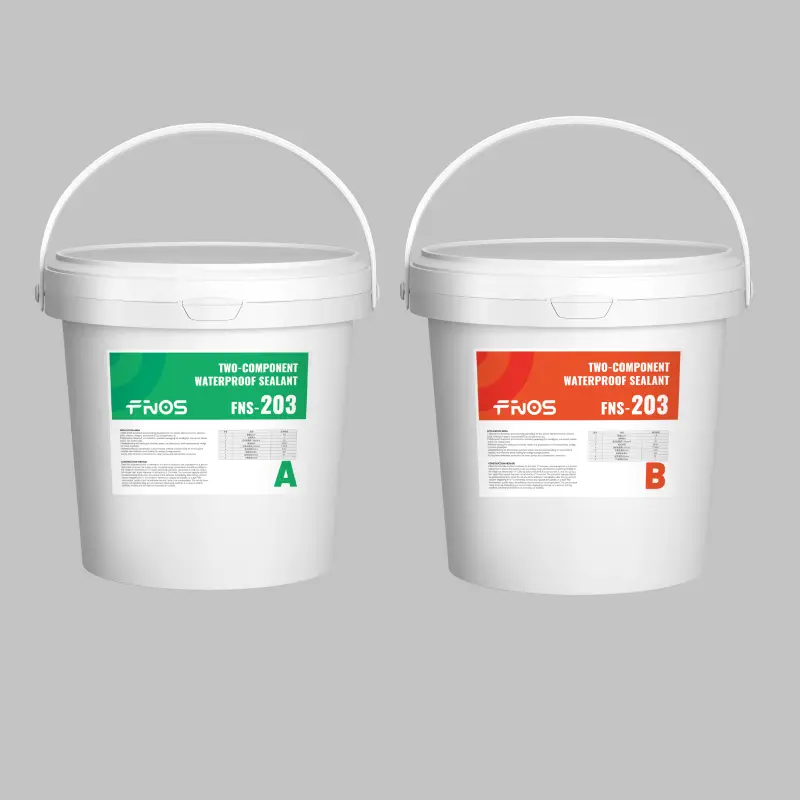
1. Two component, room temperature curing.
2. After curing, it forms a non porous, low-permeability silicone rubber layer that prevents the penetration of moisture, salt spray, and oily media.
3. Excellent electrical insulation performance.
4. It has a wide temperature range, maintaining its elasticity and mechanical properties in a broad temperature range of-50°C to +200°C.
5. It is UV-resistant, ozone-resistant, and resistant to high and low temperature cycling. Its performance remains essentially unchanged after 1000 hours of aging at 85°C/85% RH.
6. Low shrinkage and low stress, there is virtually no volume shrinkage during the curing process, preventing cracks or delamination caused by stress.
Applications
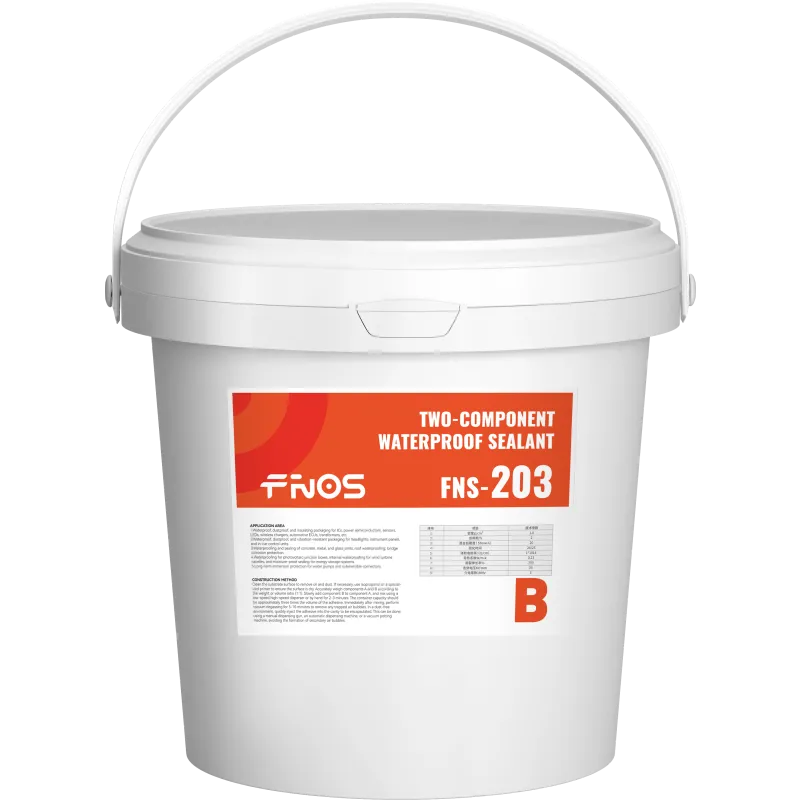
1. Waterproof, dustproof, and insulating packaging for ICs, power semiconductors, sensors, LEDs, wireless chargers, automotive ECUs, transformers, etc.
2. Waterproof, dustproof, and vibration-resistant packaging for headlights, instrument panels, and in-car control units.
3. Waterproofing and sealing of concrete, metal, and glass joints; roof waterproofing; bridge corrosion protection.
4. Waterproofing for photovoltaic junction boxes, internal waterproofing for wind turbine nacelles, and moisture-proof sealing for energy storage systems.
5. Long-term immersion protection for water pumps and submersible connectors.
Technical Information
The operating conditions are 23±2°C and relative humidity 50±5°C.The test results are as follows:
| No. | Property | Technical Specifications |
| 1 | Density / (g/cm³) | 1.0 |
| 2 | Pot Life / h | 2 |
| 3 | Hardness After Mixing (Shore A) | 20 |
| 4 | Curing Time | 24h / 25°C |
| 5 | Volume Resistivity / (Ω·cm) | 1*10^14 |
| 6 | Thermal Conductivity / (W/m·K) | 0.23 |
| 7 | Elongation at Break / % | 200 |
| 8 | Dielectric Strength / (kV/mm) | 20 |
| 9 | Dielectric Constant (1 MHz) | 3 |
Color
color: white, black, gray, or be customized as requested.
construction method
Clean the substrate surface to remove oil and dust. If necessary, use isopropanol or a specialized primer to ensure the surface is dry. Accurately weigh components A and B according to the weight or volume ratio (1:1). Slowly add component B to component A, and mix using a low-speed high-speed disperser or by hand for 2-3 minutes. The container capacity should be approximately three times the volume of the adhesive. Immediately after mixing, perform vacuum degassing for 5-10 minutes to remove any trapped air bubbles. In a dust-free environment, quickly inject the adhesive into the cavity to be encapsulated. This can be done using a manual dispensing gun, an automatic dispensing machine, or a vacuum potting machine, avoiding the formation of secondary air bubbles.
Why Choose Finos
Expertise & Advanced Laboratory
With 20+ years of expertise and state-of-the-art laboratory equipment, we ensure every batch meets the highest global standards.
Proven Customization Success
Deliver custom formulas and colors, helping many clients achieve market success with high-performance, tailor-made sealant solutions.
Advanced Reverse Engineering
We analyze and replicate complex formulas, delivering high-performance alternatives that match or exceed original product specifications.
Traceable Quality Assurance
Every shipment is sampled and tested quarterly, with transparent reports sent to clients for guaranteed long-term reliability.
Get Free Tailored Sealing Quote in 24 Hours!